In the modern era of travel, the quest for efficiency extends beyond itineraries to the very gear we carry. Lightweight luggage has become a non-negotiable for savvy travelers, promising ease of mobility and freedom from excess baggage fees. of durability. Understanding the science behind lightweight luggage and durable lightweight suitcase designs is key to making an informed choice that balances both priorities.
The Science of Lightweight Luggage: Beyond Simple Weight Reduction
The term "lightweight" in luggage is not merely about shedding pounds; it represents a sophisticated application of material science and engineering innovation. Traditional luggage materials like heavy-duty fabrics or rigid plastics are being reimagined through advanced polymers and alloys.
Key Materials Driving Lightweight Durability:
- Polycarbonate (PC) Shells:This thermoplastic polymer is renowned for its exceptional impact resistance and flexibility. Unlike brittle materials, PC can absorb shocks and return to its original shape, making it ideal for protecting belongings during transit. Its inherent strength allows manufacturers to use less material overall, significantly reducing weight without compromising protection. Modern durable lightweight suitcase options often feature hard-shell PC construction.

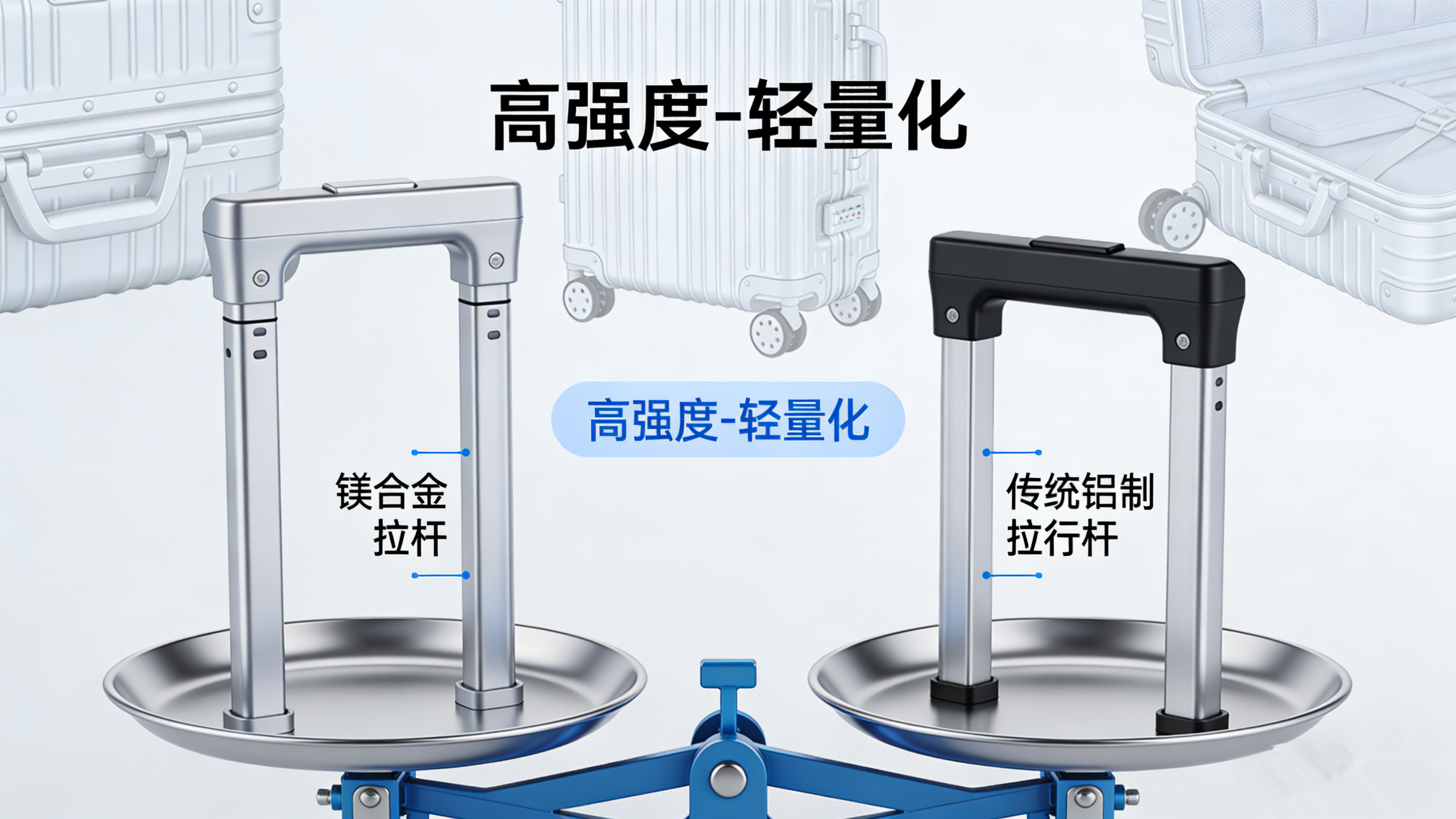
- Magnesium Alloy Frames and Components:Magnesium alloys are among the lightest structural metals available, offering an excellent strength-to-weight ratio. When used in telescopic handles (often called 'pullers' or 'tubes'), they provide robust support with minimal added weight compared to traditional aluminum or steel alternatives. This directly contributes to the overall lightweight luggage
- High-Tensile Strength Fabrics:For soft-sided luggage, advancements in woven textiles like ballistic nylon or high-denier polyester offer incredible tear resistance while remaining remarkably light. These fabrics are often treated with water-resistant coatings and feature reinforced stitching patterns.
Achieving the Balance: Lightness Without Compromise
The true challenge lies not just in making luggage light, but in ensuring it remains resilient enough to withstand the rigors of travel – from baggage handlers to crowded overhead bins. Here’s how smart design bridges the gap:
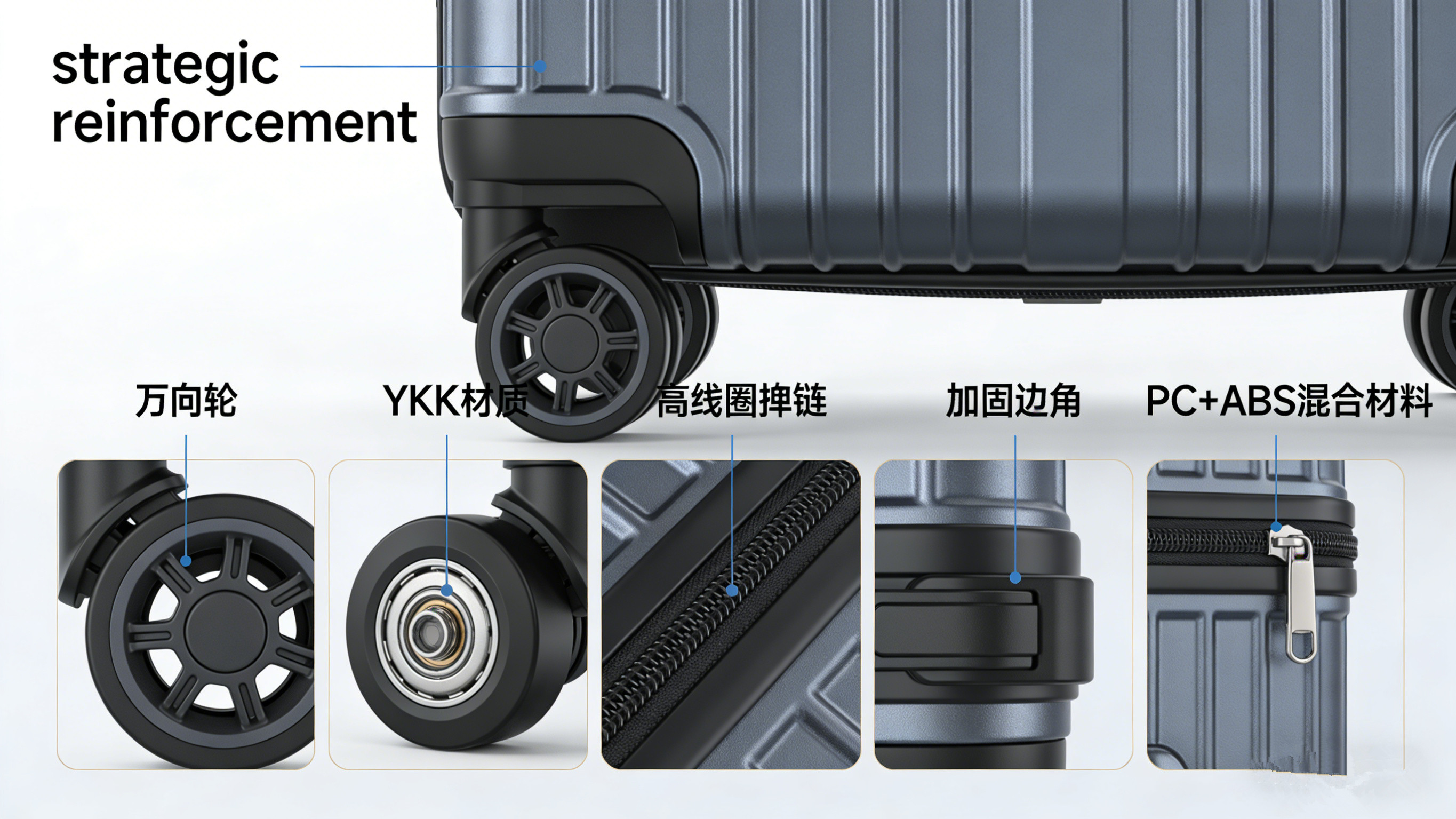
- Strategic Reinforcement:Instead of uniform thickness, manufacturers focus material where it's needed most. This means reinforced corners and edges on hard-shell cases (often using impact-absorbing materials like ABS blended with PC) and reinforced stress points on fabric luggage. This targeted approach adds durability precisely where impacts are most likely, without adding unnecessary weight elsewhere.
- Optimized Frame and Structure:Internal frames in soft-sided luggage or the monocoque construction of hard shells are designed for maximum rigidity with minimal material. Lightweight yet strong frames (like those using aluminum alloys or composites) prevent the bag from collapsing or deforming under load.
- Efficient Component Design:Every component is scrutinized. Wheels use lightweight yet durable hubs and smooth-rolling bearings. Zippers are lighter high-coil-count versions made from robust materials. Even the choice of handle grip material contributes to the overall weight equation.
Choosing Your Perfect selecting lightweight luggage, prioritize features that signal durability alongside lightness:
- Material Transparency:Look for clear labeling – "100% Polycarbonate" or "Magnesium Alloy Frame" are good indicators.
- Construction Quality:Inspect seams, zippers, and handle attachments. Smoothly operating, robust zippers (like YKK) and securely attached handles are crucial for longevity.
- Wheel Performance:Test the wheels. They should roll smoothly in all directions and feel sturdy, not flimsy. Spinner wheels (four wheels) offer excellent maneuverability with minimal effort.
- Weight Specs:Pay attention to the actual weight of the empty suitcase. Compare similar-sized models – significant differences often reflect material choices.
- Warranty:A strong warranty covering damage from airline handling is a good sign of the manufacturer's confidence in their durable lightweight suitcase.

Conclusion: Travel Light, Travel Smart
The evolution of
lightweight luggage is a testament to how material science and innovative design can solve the traveler's dilemma. By understanding the principles behind polycarbonate shells, magnesium alloys, and optimized structures, you can confidently choose a suitcase that offers effortless mobility without sacrificing the resilience needed for your journeys. The perfect
durable lightweight suitcase isn't a compromise; it's the smart, modern way to travel.


